es_ES
es_ES fr_FR
fr_FR pt_PT
pt_PT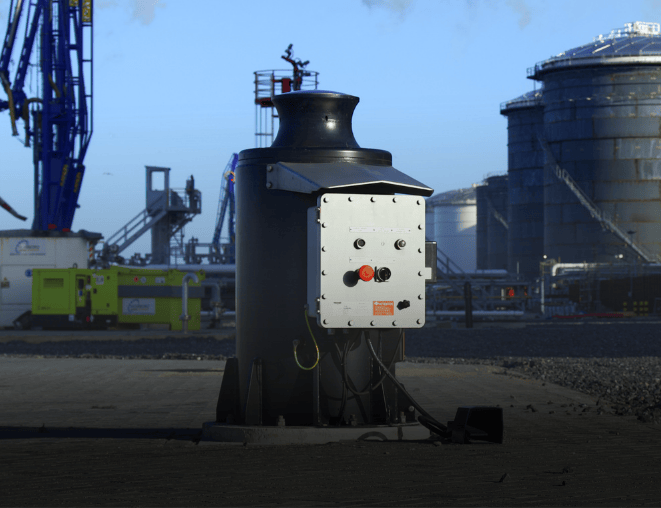
Capstans
As an integral part of your quick release mooring hooks or separate custom-made capstans






Modern vessels are larger, heavier and less forgiving during berthing. As a result, terminals need accurate, real-time insight to control approach speed, distance and vessel position.
The Straatman Berthing Aid System (BAS), also known as a Docking Aid System, supports safe and controlled vessel berthing at jetties and terminals. The system provides clear, real-time data to operators, enabling timely decisions and reducing berthing risk.




A Berthing Aid System is a shore-based system that monitors the position and movement of an approaching vessel during berthing. Using laser-based measurement technology, the system continuously measures the distance between the vessel and the jetty.
Operators use this information to control the berthing process and respond immediately when conditions change. In practice, the system reduces uncertainty during the final berthing phase and supports safer vessel positioning.
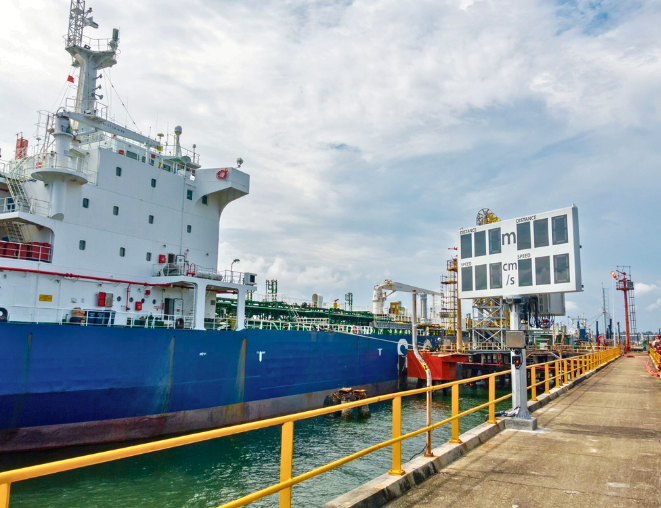
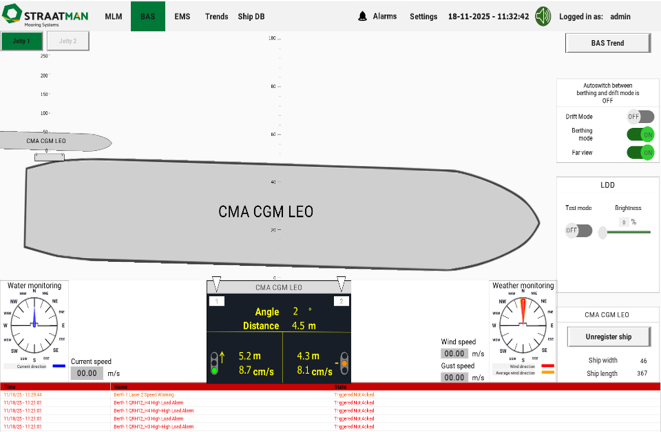
The Straatman Berthing Aid System uses laser sensors to continuously measure the distance between the vessel hull and the jetty. The system processes this data in real time and presents it clearly to operators at the jetty and in the control room. As a result, operators can monitor the berthing process closely and intervene immediately when required.
All measurements appear on large LED displays at the jetty and on standard operator screens. Straatman supplies the LED display technology through our affiliated company FactoryLab, ensuring clear and reliable visual feedback in all operating conditions.
In addition to distance measurement, the Berthing Aid System supports safe and efficient daily operations through integrated functionality.
Optional system features include wireless tablet communication, pager systems and integration with terminal control environments. These tools help operators follow their preferred operational workflow and maintain situational awareness during berthing.
All system components work together as one integrated solution. This makes the system suitable for different terminal layouts and varying environmental conditions. As a result, both the Berthing Aid System and the Docking Aid System provide consistent and reliable operational support.
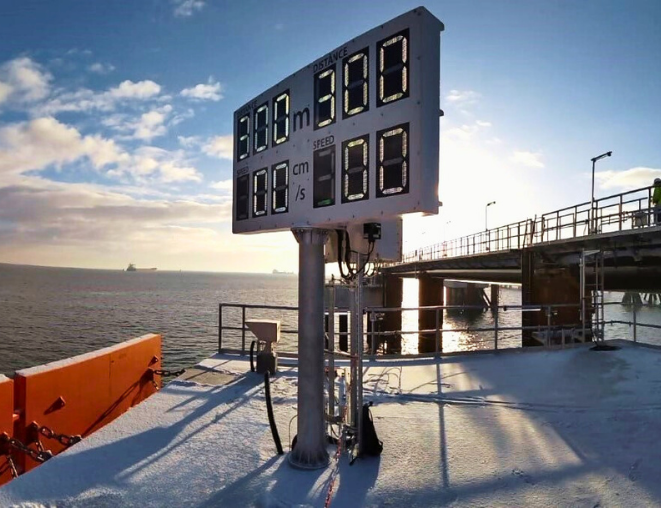
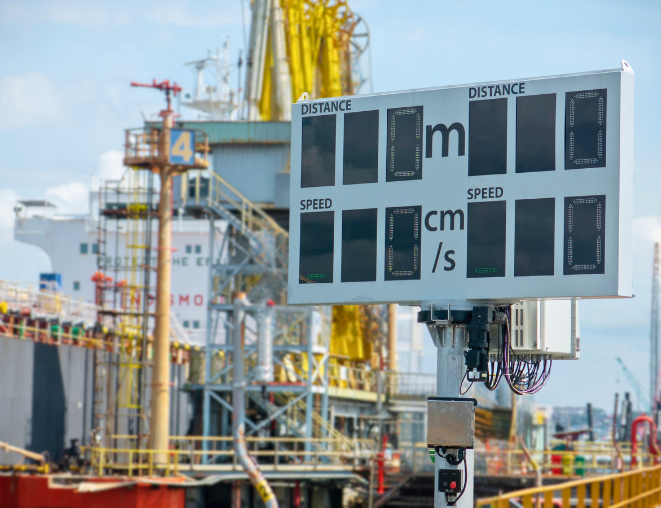
The Berthing Aid System monitors the key parameters that influence safe vessel berthing, including:
Operators use this real-time data to maintain control throughout the berthing process and reduce the risk of contact damage.
Straatman designs the laser sensors for continuous operation in demanding marine environments. Key features include:
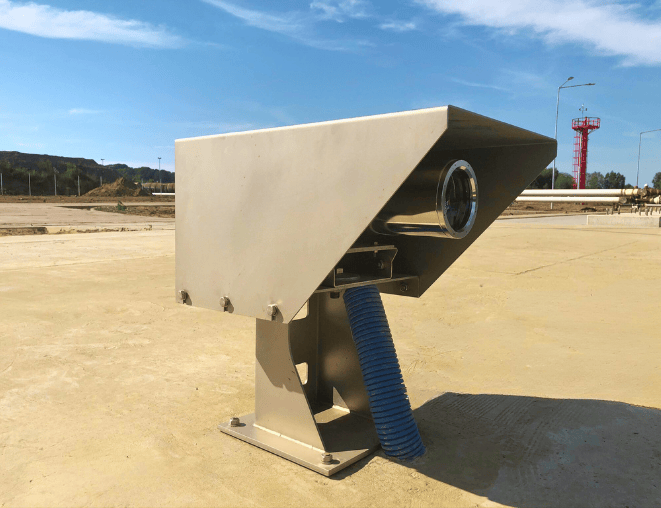
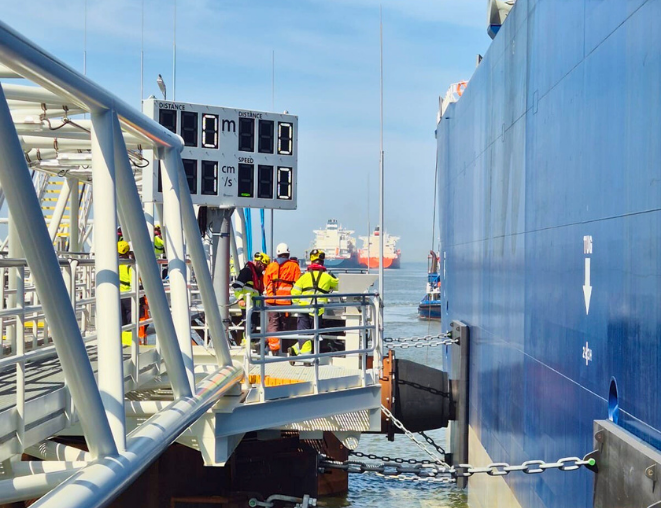
Straatman configures each Berthing Aid System to match the terminal layout and operational requirements.
Available configuration options include:
The system integrates easily into existing terminal infrastructure and control systems.
Straatman designs the Berthing Aid System specifically for use at:
Each system supports safe berthing under real operational conditions, including limited visibility, high traffic density and changing weather.
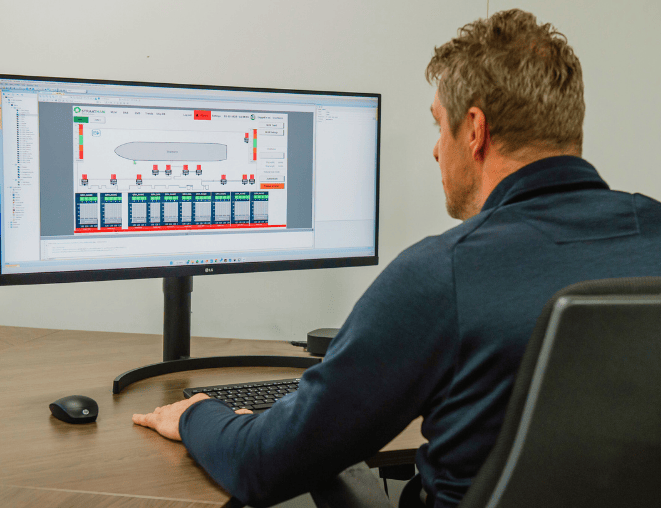






A Berthing Aid System is a shore-based system that supports safe vessel berthing at jetties and terminals. The system provides real-time information about vessel distance, approach speed and position during the final berthing phase.
Operators use this information to control vessel approach and reduce the risk of contact damage to the vessel, quay and fender system.
Yes. The terms Berthing Aid System and Docking Aid System refer to the same type of solution. Both describe systems that support safe vessel approach and positioning at a jetty.
In practice, terminals use these terms interchangeably, depending on local terminology or project documentation. Straatman supports both definitions and delivers systems that meet the operational intent behind each term.
Terminals use a Berthing Aid System to improve safety and control during vessel berthing. The system reduces uncertainty during the final approach by providing clear and reliable real-time data.
As a result, operators can prevent damage to vessels, quay structures and fenders while maintaining safe and efficient berthing operations.
The system uses sensors installed at the jetty to continuously measure the movement of an approaching vessel. The system processes this data in real time and displays it clearly to operators at the jetty and in the control room.
This allows operators to follow the berthing process closely and respond immediately when conditions change.
Depending on the configuration, a Berthing Aid System provides real-time information such as:
– Distance between vessel and quay
– Approach speed
– Angle of approach
– Bow and aft position
Operators use this data to manage the berthing process in a controlled and predictable manner.
Our Mooring and Berthing Catalogue offers clear specifications, available options, and essential product insights.
We are your partner for your complete mooring system!